Scar Adhesions: What’s Happening Beneath Your Scar?
Sep 17, 2026Scar Adhesions: What’s Happening Beneath Your Scar?
Your scar may look like a thin line or well healed on the surface of your skin.
But that's not necessarily the whole story.
Following surgery or injury, healing doesn't only happen in the skin that you can see. Depending on the surgery or injury you've had, multiple layers of tissue underneath may also have been affected.
And sometimes those tissues don't regain their normal movement as well as we'd like.
They can become restricted or stuck together.
This is where you may hear the word “adhesions.”
And they can help explain why a scar that looks completely healed on the outside can still feel tight, painful, lumpy, restricted or simply not quite right.
So, what exactly is an adhesion?
Think about healthy tissues as layers.
You have skin, connective tissue, fascia, muscle and other structures underneath, and depending on where you are in the body, deeper tissues and organs beneath those again.
In a healthy area, those layers aren't supposed to behave like one solid block.
👉 They need to move and glide in relation to one another.
When you bend, twist, reach, stretch or contract a muscle, your tissues adapt to that movement.
Following injury and healing, scar tissue forms as part of the body's normal repair process.
Sometimes, however, tissues can become restricted or adhere to one another rather than moving as freely as they did before.
Imagine several sheets of fabric lying on top of one another.
Normally, you can slide one sheet across another.
Now imagine pinning several of those sheets together in one spot.
Suddenly, when you pull one layer, the others are pulled with it.
That's a useful way to think about scar-related restriction.
The iceberg analogy
Another analogy I often use is an iceberg.
The scar you see on your skin is the part of the iceberg sitting above the water.
But underneath that visible line are all the tissues that were affected by the surgery or injury.
That's the much larger part of the iceberg sitting below the surface.

And that's why appearance alone doesn't tell me everything I need to know about a scar.
A scar can look:
- flat
- pale
- thin
- beautifully healed
…and still have restriction within the tissues underneath.
Equally, not every scar has problematic adhesions simply because surgery has taken place.
It's how the area feels, moves and functions that matters.
What can scar adhesions feel like?
Different people describe them differently.
You might notice:
- pulling or tightness around the scar
- an indented scar that's tethered inward
- thickened, firm or lumpy tissue underneath
- discomfort or pain
- altered sensation
- restriction when you stretch or move
- the skin or tissues not moving as freely in one direction
- a feeling that you can't quite straighten or extend fully.
Sometimes I can feel an obvious area of restriction when I assess a scar.
Other times there isn't a dramatic lump or thickened area at all.
Instead, the clue comes from how the tissues move and what happens when the person moves their body.
And the problem might not be exactly where your scar is
This is one of the most interesting things about scar rehabilitation.
Our bodies don't move as completely separate parts.
Muscles, fascia, skin and connective tissues work together across regions of the body.
So restriction around one area can sometimes contribute to altered movement elsewhere.
Take breast cancer surgery as an example.
The visible scar may be across the breast or chest wall.
But the person might tell me:
“I can't get my arm properly overhead anymore.”
Or:
“I can't straighten my posture fully, I'm all stooped forward.”
That's why when somebody comes to me following breast cancer surgery, I'm not simply looking at the scar line.
I'm also interested in their shoulder, chest wall, neck, upper back and overall movement.
The location of the symptom and the location of the visible scar aren't always identical.
Adhesions can impact more than just movement.
Following abdominal or pelvic surgery, internal adhesions can form between organs or between organs and the abdominal wall. Normally these surfaces move freely; an intra-abdominal adhesion can cause them to stick together.
Many internal abdominal adhesions never cause symptoms at all.
However, some can cause problems including chronic abdominal pain, menstrual dysfunction, pelvic floor dysfunction, and abdominal adhesions are an important cause of small-bowel obstruction. Symptoms or complications can also appear many years after the original surgery.
If someone develops significant abdominal pain, vomiting, bloating, constipation or an inability to pass stool or gas, particularly with a history of abdominal surgery, that's something requiring medical assessment rather than scar therapy.
Can adhesions cause problems years later?
Scar-related restrictions don't necessarily announce themselves immediately.
Sometimes someone is aware of tightness relatively early in their recovery.
For somebody else, the area may initially cause very little trouble.
Over time they may gradually become aware that a particular movement doesn't feel right, that an area feels persistently tight, or that they've started moving differently around it.
And importantly, internal abdominal adhesions can also remain asymptomatic and cause complications much later after surgery.
So I wouldn't assume that every new pain years after surgery is caused by an old scar.
But equally, when assessing somebody with a history of surgery, that history is relevant and worth considering as part of the bigger clinical picture.
What can we do about scar-related restriction?
This depends enormously on the scar.
How old is it?
Has the wound completely healed?
What type of scar is it?
Where is it?
What tissues were involved?
What symptoms are you experiencing?
And what movements or activities are being affected?
Once it's safe and appropriate to work with the area, scar rehabilitation might include carefully selected hands-on techniques, movement and stretching, desensitisation, self-management techniques and rehabilitation of the surrounding area.
The aim isn't to aggressively “break up” scar tissue.
That's language I deliberately avoid.
Instead, we're trying to improve mobility and function within and around the scar and help the tissues tolerate normal movement again.
LymphaTouch® - negative pressure therapy for adhesions
LymphaTouch® is one of the tools I may use in my clinic as part of scar rehabilitation.
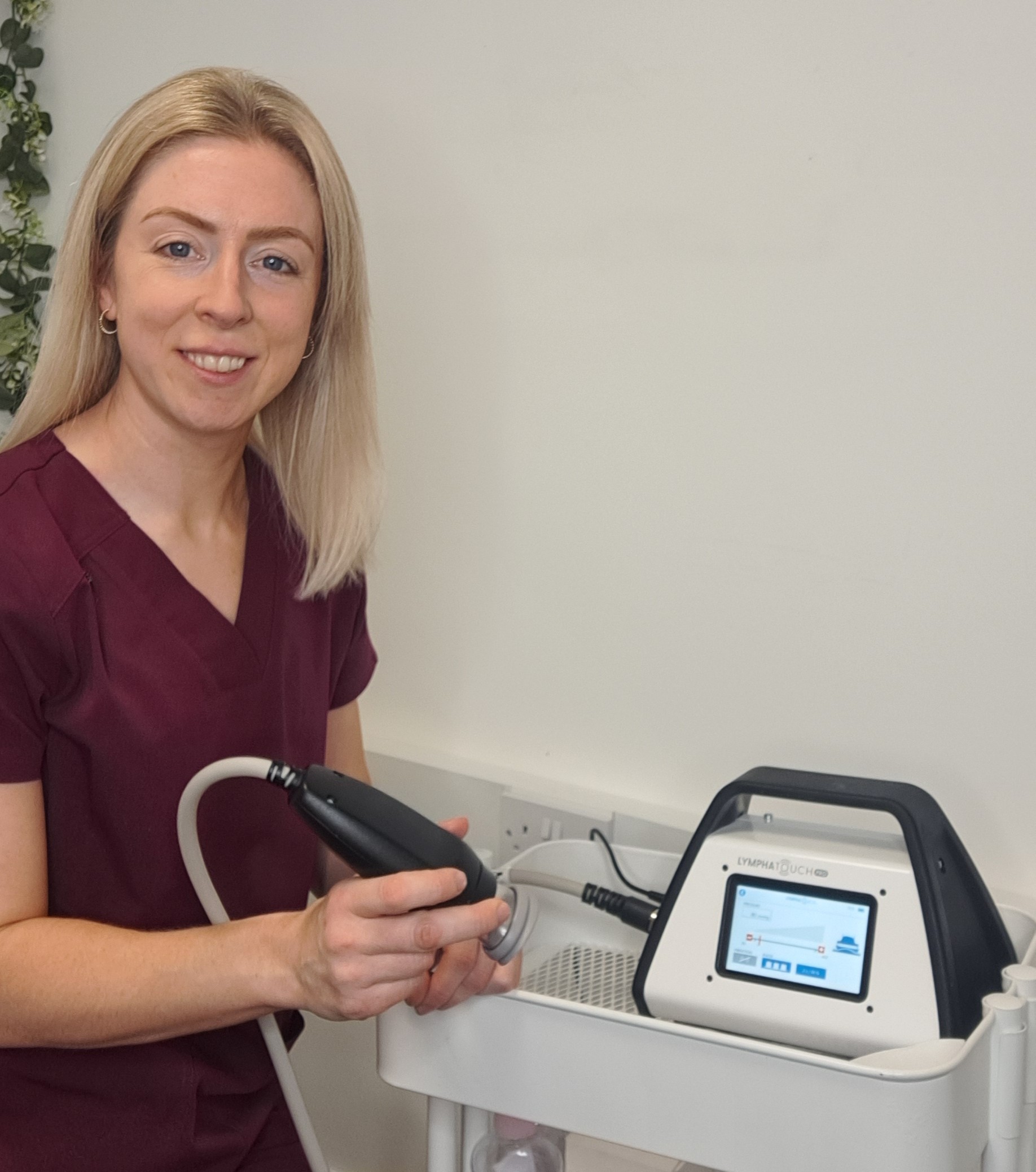
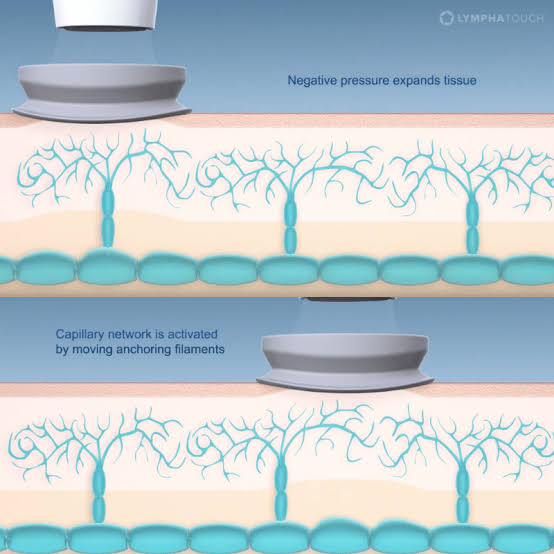
Hands-on scar massage and mobilisation can be extremely beneficial for improving scar mobility, tightness and restriction. But when tissue layers feel particularly tethered or almost ‘glued’ together, sometimes we want to create space between those layers rather than simply working down into them. LymphaTouch® uses controlled negative pressure to gently lift the skin and superficial tissues, helping restricted layers move more freely and encouraging that natural ‘slide and glide’ between the tissues again.
Clinically, I find using Lymphatouch particularly useful when working with areas of scar-related tissue restriction and when swelling or lymphatic issues are also part of the picture.
People are often surprised by how gentle it feels.
Depending on the scar, I'll often combine it with hands-on treatment and movement rather than using it as a treatment in isolation.
Do all scars need treatment for adhesions?
No.
And I think that's important too.
Scar formation is a normal part of healing.
The presence of a surgical scar doesn't automatically mean there's something wrong underneath that needs to be “fixed”.
I'm much more interested in questions such as:
Does it hurt?
Does it feel unusually tight or tethered?
Is it affecting your movement?
Has your body started compensating around it?
Is it preventing you from getting back to something you want to do?
That's when assessment with me at the clinic becomes useful.
Your scar is more than the line you can see
This is probably the main thing I'd like you to remember.
A scar is three-dimensional.
What we see on the surface gives us useful information, but it doesn't necessarily tell us how all of the tissues underneath are moving.
That's why my scar assessments look beyond appearance.
I want to know how your scar looks, feels and moves, and have you compensated in how you move around it?
Because sometimes the thing that's been bothering you isn't simply the scar you can see.
It's what's happening beneath it.
Does your scar feel tight, stuck or restricted?
If you've had surgery, cancer treatment, a C-section or an injury and your scar continues to feel painful, tight, tethered or restrictive, you're welcome to book a scar assessment with me at The Scar Expert in Letterkenny, Co. Donegal.
We'll look at the scar itself, the surrounding tissues and your movement to work out what's actually contributing to the problem, and what may help.
BOOK A SCAR ASSESSMENT → HERE
LEARN MORE ABOUT LYMPHATOUCH → HERE
Lorraine x
The Scar Expert
Specialist Scar Rehabilitation
Oncology • C-section • Surgical scars
Lorem ipsum dolor sit amet, consectetur adipiscing elit. Cras sed sapien quam. Sed dapibus est id enim facilisis, at posuere turpis adipiscing. Quisque sit amet dui dui.
Stay connected with news and updates!
Join our mailing list to receive the latest news and updates from our team.
Don't worry, your information will not be shared.
We hate SPAM. We will never sell your information, for any reason.