C-Section Scar Overhang, Indentation & Treatment
Oct 08, 2026Does Your C-Section Scar Still Bother You? Let's Talk About Scar Rehabilitation
A C-section scar might be just a thin line across your lower tummy, but sometimes the changes around it can be much more noticeable.
Perhaps you've developed a little overhang or shelf above your scar, or the scar itself looks deeply indented, with the tummy tissue folding over it.
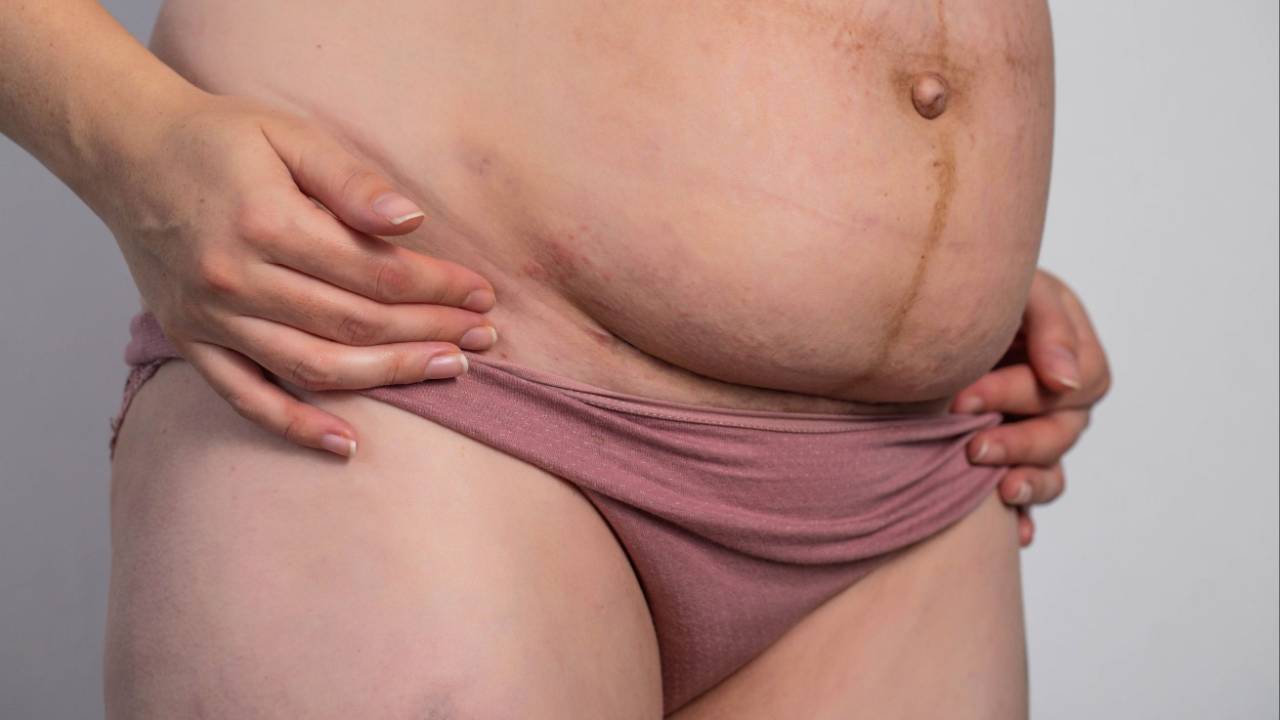
Maybe the area feels thick, lumpy or stuck, or your lower tummy still feels softer and less supported than it did before pregnancy.
And perhaps you've been looking at it for months, or even years, wondering whether there's anything you can actually do about it.
The good news is that C-section scar rehabilitation may be able to help.
C-section scar rehabilitation is still a big part of my work
Since transitioning my former practice, Down Below Physio, to The Scar Expert, I've been talking quite a bit about scar rehabilitation following cancer treatment and major surgery.
Recently, someone I was chatting to assumed that meant I was no longer treating C-section scars!
But actually, C-section scar rehabilitation remains one of the core areas of my clinical work.
I've been treating women following C-section for years, and my additional specialist training in scar rehabilitation has allowed me to develop this area of my practice even further.
And one of the things I particularly enjoy is helping women understand what's happening with their scar and what we can realistically do to improve it.
Why do some C-section scars develop an overhang or indentation?
One of the most common concerns women bring to me is the appearance of their lower tummy following a C-section.
Sometimes there's a prominent indentation along the scar line, with a fold or shelf of tissue sitting just above it.
Other times, the scar feels thickened, firm or lumpy, and the surrounding tissues don't seem to move as freely as they should.
There can be several contributing factors.
Scar tissue and tethering
As a C-section wound heals, scar tissue forms to repair the tissues affected by surgery.
Underneath your scar, the layers of tissues are meant to glide freely on each other but scar tissue extending through these layers can mean that they 'stick together' ie. adhesions. These tissue layers can because tethered to each other or to other deeper areas and organs in the abdomen.
This can contribute to a puckered or indented appearance, particularly when the tissues above the scar move differently from those below it.
Changes in the abdominal wall
Pregnancy places considerable demands on the abdominal wall.
After birth, some women experience reduced abdominal strength, changes in muscle control or persistent separation of the abdominal muscles (diastasis recti).
These changes can influence how the lower tummy looks and feels, including the sense that it is softer or less supported.
It can be worth focusing on your abdominal muscles, getting them to activate and coordinate properly, and then also working on strength and endurance.
The combined approach of remodelling your scar AND working on your abdominal muscles can make a big difference.
Changes in skin and soft tissues
Skin elasticity, changes in body composition and connective tissue changes following pregnancy can also contribute to an overhang.
This is why not every C-section shelf is caused by scar tissue, and why scar massage alone isn't necessarily the answer.
A good assessment looks at the whole picture rather than focusing only on the visible scar.
What can C-section scar rehabilitation involve?
At The Scar Expert, I assess the scar itself, the surrounding tissues, abdominal wall function and the particular concerns that have brought you to see me.
Treatment is individualised, but there are several approaches I may use.
 Hands-on scar massage and mobilisation
Hands-on scar therapy is a major part of my clinical work.
Rather than simply massaging along the visible scar line, I assess and treat the tissues above, below and around it. I use different massage techniques depending on what your scar needs, and can show you some simple techniques to do yourself at home.
For some women, improving scar mobility with scar massage may also contribute to changes in the appearance of areas that are puckered or indented.
Abdominal and core strengthening
Sometimes the scar is only one part of the problem.
I may also assess how your abdominal muscles are functioning, including how well you're able to activate and control them during movement.
Where appropriate, we'll work on exercises to gradually restore abdominal strength, coordination and support. Maybe your upper abdominal muscles and diaphragm area is tight and restricted, or your pelvic floor is functioning well and connecting in with your abdominal muscles, maybe it's an endurance issue or a power issue.
Essentially, this isn't about getting you to do hundreds of sit-ups!
It's about identifying what your abdominal wall needs and building strength in a way that's appropriate for your stage of recovery.
Silicone suction cups and LymphaTouch®
In some cases, I use controlled negative-pressure techniques to gently lift and mobilise the skin and superficial tissues.
This may include LymphaTouch® treatment in clinic or, where appropriate, teaching you how to use a small silicone suction cup at home.
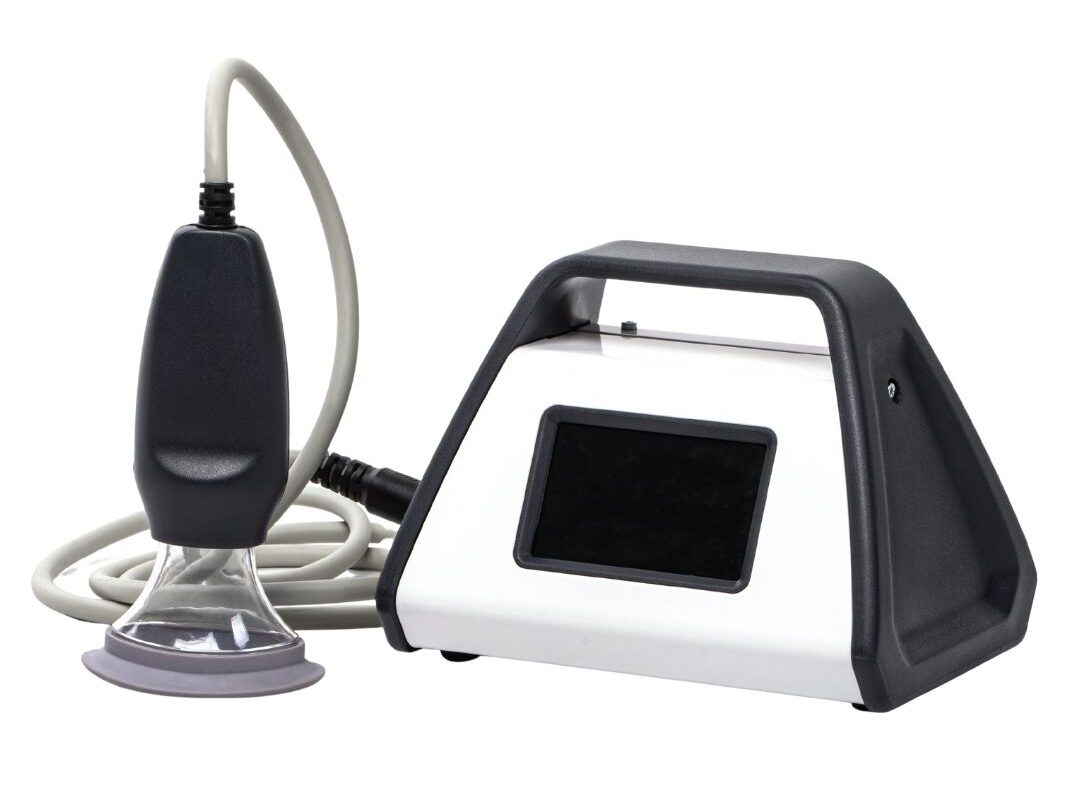
These techniques can be useful when we're working with areas of reduced tissue mobility or superficial tethering. They're particularly useful for areas where there is indentation and tissues are pinned down at the scar.
⚠️ However, suction cups aren't suitable for every scar, and I wouldn't recommend starting them on a recently healed scar without appropriate guidance.
Read my full blog on Lymphatouch
Watch this short video on Lymphatouch
The right scar-care products
There are so many creams, oils, silicone products and scar-care gadgets available that it can be difficult to know what you actually need.
Part of my role is helping you understand which products may be useful for your particular scar, whether that's supporting skin hydration, managing a raised scar or helping with your home massage routine.
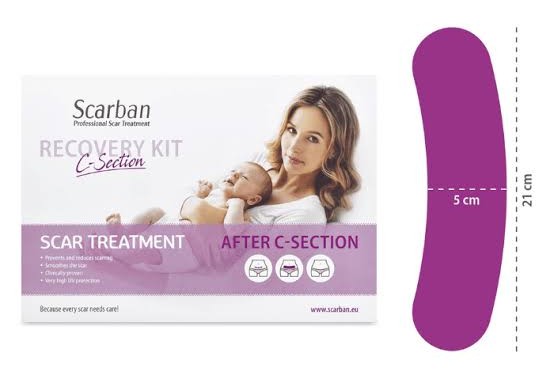
You don't necessarily need an expensive collection of products to look after your scar well.
Read my full blog on Scar Care Products
A manageable home scar-care programme
What you do between appointments can be just as important as what happens in clinic.
I'll show you appropriate techniques to use at home and help you build a realistic routine that fits around everyday life.
This might include scar massage, gentle mobilisation, sensory exercises, abdominal strengthening or advice on suitable products.
The aim is to give you the knowledge and confidence to continue working on your recovery independently.
Can scar rehabilitation actually improve a C-section overhang?
This is a question I get asked regularly.
And the answer is: generally yes, but it does depend on what's contributing to it.
If tethering or restricted tissue mobility is contributing to an indentation or the way the tissues sit above your scar, improving that mobility may help the area look and feel smoother.
Where reduced abdominal strength or control is contributing to the appearance or function of the lower tummy, rehabilitation exercises may also be beneficial.
But it's important to understand that scar therapy doesn't remove excess skin or fat, and it cannot guarantee a flatter tummy or the disappearance of an overhang.
My aim is to identify the factors we can reasonably work on and give you an individual treatment plan based on those findings.
When should you start C-section scar rehabilitation?
Generally, once your wound is fully healed and it's medically safe to begin, introducing appropriate scar care sooner rather than later can be beneficial.
Scars continue to change and remodel over many months following surgery.
During this period, gentle scar care, appropriate mobilisation and progressive abdominal rehabilitation can support recovery and help address problems as they develop.
For uncomplicated healing, scar massage is often introduced around six to eight weeks after surgery, although the appropriate timing varies. Your wound should be completely closed, with no signs of infection or other healing concerns, before direct scar massage begins.
You don't need to wait until a problem becomes severe before seeking advice.
What if your C-section was five, ten or even twenty years ago?
You haven't necessarily missed your opportunity.
Although scar remodelling is most active during the earlier stages of healing, older scars and the surrounding tissues can still respond to appropriate rehabilitation.
I see women whose C-sections were several years ago and who have simply lived with tightness, restriction, sensitivity or an area that has never felt quite right.
The approach to a mature scar may be different, and the results will depend on the individual presentation.
But the age of your scar alone shouldn't stop you from having it assessed.
Does every C-section scar need treatment?
Absolutely not.
If your scar is comfortable, moving well and isn't bothering you, there's no reason to assume that something is wrong.
But if you're experiencing persistent tightness, pulling, sensitivity, thickening, tethering or changes around your scar that concern you, specialist assessment is absolutely worthwhile.
And if it's the appearance of your scar or lower tummy that's bothering you, that's a perfectly reasonable thing to discuss too.
Ready to give your C-section scar some attention?
I provide specialist C-section scar rehabilitation at The Scar Expert in Letterkenny, Donegal.
During your initial appointment, I'll take a history, assess your scar, surrounding tissues, abdominal wall function and the specific concerns you have.
Where appropriate, we'll usually begin hands-on treatment during that first appointment, and I'll provide an individual plan to help you continue your recovery at home.
BOOK A C-SECTION SCAR ASSESSMENT
Not ready to book? Join my free email newsletter - The Scar Community
If you'd like to understand more about your scar and how to care for it, I'd love to welcome you to my free email newsletter - The Scar Community.
I share practical, evidence-informed advice about scar rehabilitation, including C-section scars, oncology scars and other surgical scars, along with helpful articles, videos and product guidance.
JOIN THE FREE SCAR COMMUNITY
Lorraine x
The Scar Expert
Specialist Scar Rehabilitation
Oncology • C-section • Surgical scars
Could scar rehabilitation help you?
If your scar feels painful, tight, sensitive or restricted, specialist scar rehabilitation may help you understand what's happening and what you can do for relief.
Join 'The Scar Community'
Practical advice and expert guidance to help you better understand and care for your scar.
Join my EMAIL NEWSLETTER for evidence-informed scar advice, helpful articles and videos, and practical guidance on recovery after surgery, cancer treatment or injury — delivered straight to your inbox.
No spam. Just useful scar information and occasional updates from The Scar Expert. Unsubscribe anytime.