What Type of Scar Do You Have, and Why Does It Matter?
Sep 23, 2026What Type of Scar Do You Have — and Why Does It Matter?
When you look at your scar, is it flat and pale? Raised and red? Thick and rope-like? Or has it started growing beyond the original scar line?
These differences aren't only about appearance.
The type of scar you have can influence how it should be managed, and some treatments that are perfectly appropriate for one scar may not be appropriate for another.
That's why understanding your scar type can be particularly useful after surgery or injury.
It can help you recognise when a scar is progressing normally, when it might benefit from a little extra support and, importantly, when it's worth getting advice sooner rather than waiting for it to become more established.
So let's look at three of the scar presentations I commonly see in clinic.
1. Normotrophic and atrophic scars
Many scars eventually become relatively flat, pale and unobtrusive. Also called normotrophic scars.
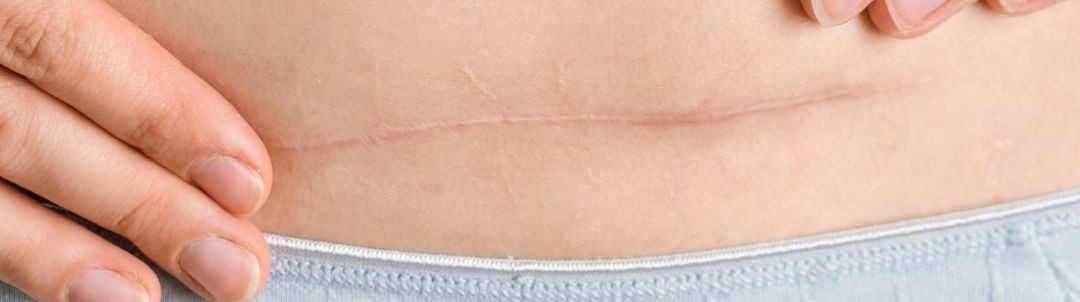
Image: Normotrophic scar
Some scars may also become atrophic, meaning there is a slight depression or indentation rather than the scar sitting level with the surrounding skin.
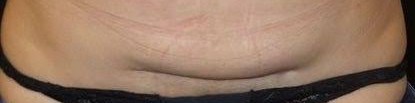
Image: Atrophic Scar
These scars don't have the raised, thickened appearance we associate with hypertrophic or keloid scarring.
And often, that's a good thing.
A settled, flat scar with healthy, well-hydrated skin may not require lots of scar products, compression or intensive treatment simply because a scar is present.
But there's an important catch.
A scar can look great and still cause problems underneath
This is something I really want people to understand about scars.
How a scar LOOKS versus how it FEELS and MOVES are not necessarily the same thing.
A beautifully faded line on the surface doesn't automatically tell us how well the tissues underneath are moving.
Following surgery, healing occurs through multiple layers of tissue. Restrictions can develop between those layers, and sometimes the effects are only apparent when we actually assess how the area moves and feels. These are called adhesions and I'll be doing a separate blog with a focus on them in particular.
I once treated a woman who had experienced significant pain around an old surgical scar for years.
Visually, her scar looked excellent: thin, flat and faded. She had repeatedly been reassured that it was a “perfectly healed scar”.
Yet when I assessed her abdomen, there was a very obvious area of restricted, thickened tissue beneath the scar line at the skin surface.
After three scar-therapy sessions, her longstanding pain improved dramatically.
It's a good reminder that we shouldn't assess a scar by appearance alone.
2. Hypertrophic scars
A hypertrophic scar behaves quite differently.
These scars are typically raised, firm and thicker than the surrounding skin and may remain pink or red for some time.
They develop when increased collagen is laid down during the healing process.
One of their defining characteristics is that although the scar becomes raised and bulky, it generally remains within the boundaries of the original wound or incision.
That's an important distinction when we compare it with a keloid scar.
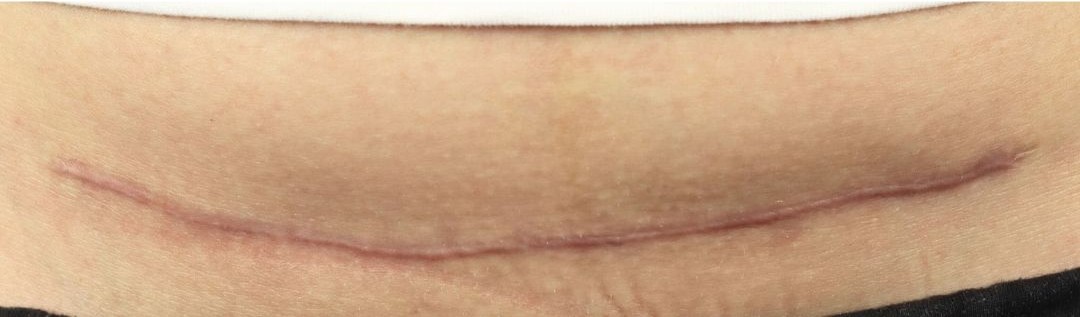
Image: Hypertrophic Scar
Hypertrophic scars can also cause symptoms beyond appearance. They may feel:
- tight or stiff
- itchy
- sensitive or tender
- painful
- restrictive during movement.
Depending on their location, that restriction can start affecting how the surrounding area moves.
3. Keloid scars
Keloid scars also involve excessive scar-tissue formation, but they behave differently again.
Rather than remaining within the boundaries of the original wound, a keloid scar can grow beyond the original margins of the injury or incision into the surrounding skin.
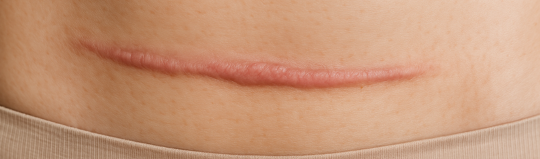
Image: Keloid Scar
It may become increasingly raised, firm and prominent over time.
There can be a genetic predisposition to keloid scarring, and keloids occur more commonly in people with darker skin pigmentation.
They can also cause symptoms including itching, tenderness, tightness and pain.
For some people, appearance becomes a significant concern too, particularly when a keloid develops somewhere prominent such as the face, neck, chest or shoulders.
And this is one reason identifying the type of scar matters.
Why does knowing your scar type change treatment?
Because scar treatment isn't one-size-fits-all.
Something that's useful for one scar may be unnecessary, or potentially the wrong approach, for another.
For example, a flat, mature scar with healthy skin may not require silicone or compression simply for the sake of using them.
A hypertrophic scar, or a scar beginning to show signs of excessive thickening, may benefit from a very different management strategy.
Depending on the individual scar, this might involve approaches such as:
Silicone therapy
Silicone gel or sheeting is commonly used in the prevention and management of hypertrophic and keloid scars.
Compression
I'm a big fan of compression for the management of certain raised or thickened scars, and there's many options for compression strategies.
Managing tension around the scar
The forces acting across a healing wound can influence scar formation. Looking at movement, surrounding tissue restriction and ways of reducing unnecessary tension across the area can be really important.
Movement rehabilitation
Sometimes we need to look beyond the scar itself and restore movement in the surrounding tissues and body region to offload the scar and optimise its healing.
Appropriate hands-on treatment
Manual treatment needs to be selected according to your scar type, as well as the scar's age, presentation and behaviour rather than simply massaging every scar in the same way.
And this last point is particularly important.
Should you massage every scar?
No, and certainly not in exactly the same way.
I see lots of generic advice online encouraging people to rub, stretch, scrape or aggressively massage scar tissue.
But more force doesn't automatically mean better scar treatment.
With a mature, flat scar, we may have considerably more freedom to work on mobility within and around the scar, provided the tissue is healthy and the technique is appropriate.
With an active hypertrophic or keloid scar, I'm generally much more cautious about techniques that create significant friction, irritation or excessive tension across the scar.
And if a scar is still relatively new, its stage of healing matters regardless of what type of scar it may eventually become.
This is why the advice I give one person after surgery can look completely different from the advice I give another.
Your previous scars can give you useful information
If you've had a hypertrophic or keloid scar before, that's worth mentioning to your healthcare team if you're having another operation.
It doesn't mean that every future scar will behave the same way.
But a previous history can indicate an increased tendency towards problematic scarring, and knowing that before or early in the healing process gives us an opportunity to be proactive.
Rather than waiting until a scar has become significantly raised and established, an appropriate plan can be considered as healing progresses.
Depending on the wound, location and individual circumstances, this might include silicone, appropriate taping or compression, movement and tension management, skin care and carefully selected scar-management techniques.
Why do some scars become hypertrophic or keloid?
There isn't always one simple reason.
Genetic predisposition plays a role, particularly with keloid scars. The location of the wound and the amount of mechanical tension through the area can also influence scar behaviour.
Problems during wound healing, such as prolonged healing or infection, can also increase the risk of abnormal scar formation.
This is another reason I don't look only at the scar itself during an assessment, I take a thorough history. I want to know the background behind it.
I want to know how it developed, how it healed, how old it is, what symptoms you're experiencing and what's happening in the tissues and movement around it.
Location matters too
The same scar-management product isn't necessarily practical everywhere on the body.
For example, for a keloid scar developing on a small or visible area, silicone gel can be particularly convenient whereas wearing a silicone sheet may be impractical.
On a larger body area, silicone sheeting, tape or an appropriately selected compression garment may sometimes be more suitable and beneficial.
We also have to think about how much movement and tension an area experiences.
An abdominal scar, for example, is affected every time we stand, bend, reach, twist or use our trunk. A scar around a joint has another set of movement demands.
That's why I prefer to choose scar management based on the person, scar, location and stage of healing, rather than giving everyone the same list of products.
Earlier is often easier than later
This is probably the most important message I want you to take from this article.
You don't have to wait until a scar has become a significant problem before asking for advice.
If you're preparing for surgery, particularly if you've experienced hypertrophic or keloid scarring previously, knowing how to look after the scar as it heals can be incredibly useful.
And if a healing scar is becoming increasingly raised, thickened, firm, red or symptomatic, it's worth getting appropriate advice rather than simply waiting to see what happens.
That doesn't mean mature scars can't be treated.
They absolutely can still be assessed, and there may be things we can work on even many years later, particularly symptoms such as restriction, sensitivity, discomfort or surrounding movement.
But a very mature, established hypertrophic or keloid scar can be considerably more difficult to change in terms of the visual aesthetics than a scar identified and appropriately managed earlier.
In some cases, particularly with established keloids, medical treatments may also be appropriate and assessment by a dermatologist, plastic surgeon or other medical specialist may be required.
So, what type of scar do you have?
Take another look at your scar.
Is it flat?
Indented?
Raised but contained within the original scar line?
Or has the scar tissue extended beyond the original wound (spread out)?
And then ask yourself something equally important:
How does it feel and how does it move?
Because a scar doesn't need to look dramatic to be causing a problem, and certain scars do benefit from certain approaches.
The goal is to understand what your particular scar needs.
Concerned about how your scar is healing?
If you're preparing for surgery, have noticed your scar beginning to thicken or change, or have an older scar that's painful, tight, sensitive or restricting your movement, you can book a scar assessment with me at The Scar Expert.
We'll assess the scar itself, the tissues around it and how the area is functioning before deciding what, if anything, it needs.
And if you know somebody preparing for surgery or currently dealing with a changing scar, share this article with them. Knowing what to look for early can make it much easier to seek the right advice at the right time.
📩 Don't forget to sign up for my newsletter, where you'll receive practical self-care tips, exclusive resources and be the first to hear about new services and educational programmes. YES, I WANT THIS!
Lorraine x
The Scar Expert
Specialist Scar Rehabilitation
Oncology • C-section • Surgical scars
Could scar rehabilitation help you?
If your scar feels painful, tight, sensitive or restricted, specialist scar rehabilitation may help you understand what's happening and what you can do for relief.
Join The Scar Community
Practical advice and expert guidance to help you better understand and care for your scar.
Join the Scar Community for evidence-informed scar advice, helpful articles and videos, and practical guidance on recovery after surgery, cancer treatment or injury — delivered straight to your inbox.
No spam. Just useful scar information and occasional updates from The Scar Expert. Unsubscribe anytime.